 UPDATES
Stand With Nepal: How You Can Help After the Devastating Flash Floods
On Wednesday, August 26, 2026, massive flash floods tore through the border region of Nepal and Tibet, sweeping away entire villages, roads, bridges, and hydropower projects. Experts believe an avalanche from a glacier triggered the disaster, sending a wall of water down the Bhotekoshi, Trishuli, and Narayani rivers.
The numbers coming out of Nepal are staggering. As of Thursday morning, the confirmed death toll stands at 160, with drone footage showing roads destroyed and buildings buried in mud. More than 400 people, most of them foreign visitors, remain missing. Among them are dozens of Canadians — at least 24, according to Nepal's tourism board — along with travelers from India, the United States, Australia, Britain, and beyond. Many of the missing were locals trekking through the Gosaikunda Lake area in Rasuwa district during the Janai Purnima festival.
Nepal's Prime Minister Balendra Shah has called on citizens to stay united as the toll continues to climb, pledging that the government will take full responsibility for rescue, treatment, food, and shelter for those affected. Complicating the response, the International Centre for Integrated Mountain Development has warned that a blockage still lodged upstream on the Nepal-China border river could cause water levels to rise again, raising fears of a second flood. Authorities across the border in India's Bihar state have already begun evacuating up to 12,000 people from six districts as a precaution.
This is not an isolated event — the same river system flooded under similar conditions last year, and officials have warned residents in several districts to stay clear of the riverbanks as search and rescue continues. The International Red Cross has described entire villages and markets as having simply disappeared, with damaged infrastructure making it extremely difficult to reach affected families.
Why This Matters to Our Community
For the Nepali diaspora in Canada and around the world, this tragedy hits close to home. As the Nepalese Canadian Community Services (NCCS) put it in their recent press release, this is a moment to place the safety of loved ones first, stay vigilant, and follow official emergency guidance — while extending compassion and support to those on the ground in Nepal. NCCS has expressed its deepest condolences to grieving families and its hope for a swift, safe rescue of everyone still missing.
Wherever we are in the world, our hearts remain connected to Nepal. This is a moment to stand together — and one of the most direct ways to help from a distance is to give.
How You Can Help
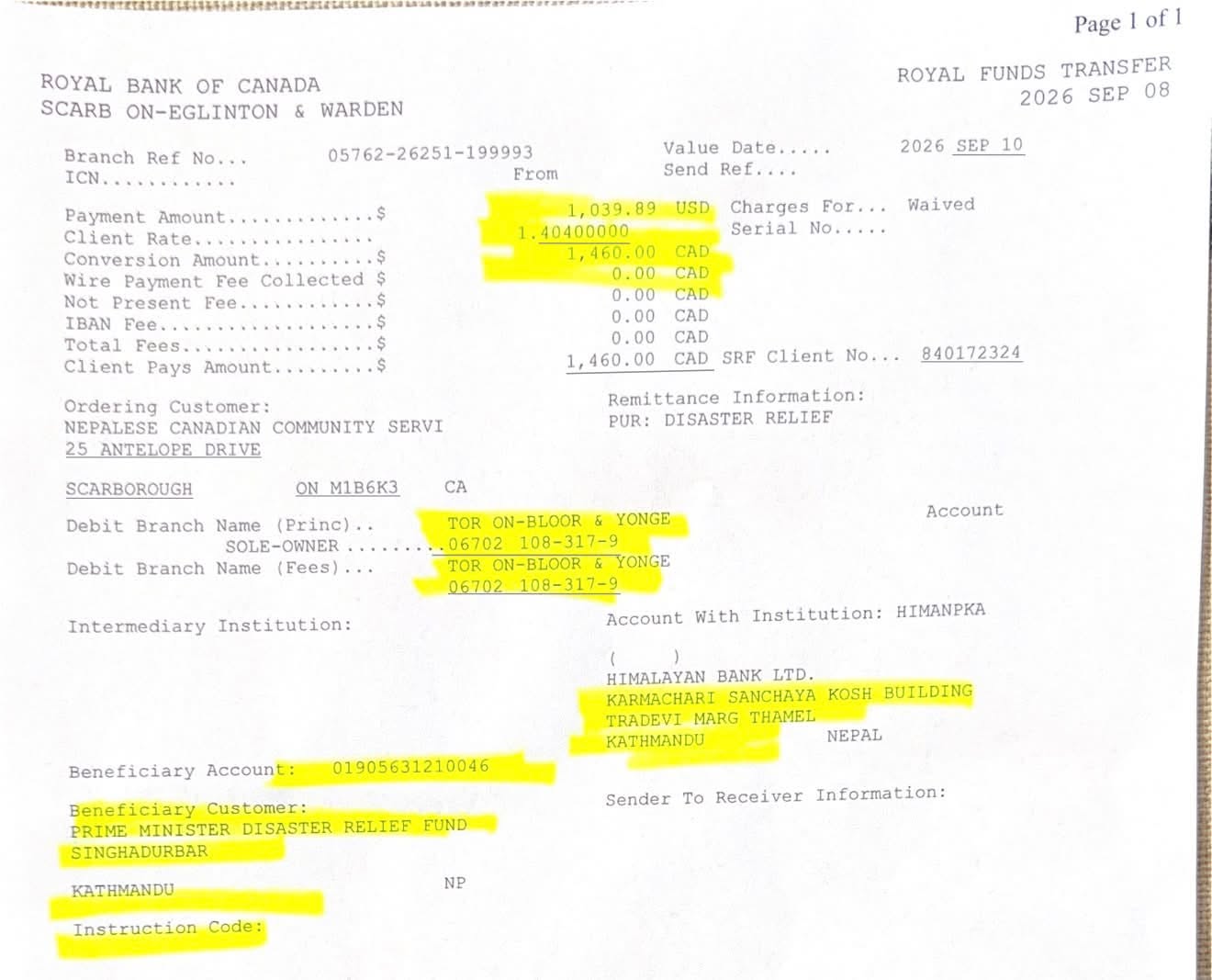
1. Donate directly to Nepal's official relief funds The Prime Minister's Office of Nepal has activated two official channels to receive contributions for disaster relief:
Prime Minister's Disaster Relief Fund (Daivi Prakop Uddhar Kosh) — accepting donations through Himalayan Bank, Standard Chartered Bank Nepal, Rastriya Banijya Bank, Everest Bank, Nepal Bank, Global IME Bank, Nabil Bank, and Krishi Vikas Bank.
Please Click Here to donate.
- Prime Minister's Relief Fund (Rahat Kosh) — accepting donations through Rastriya Banijya Bank.
Full account details are available on the official PMO Nepal graphic being circulated by the Nepal government.
2. Support trusted humanitarian organizations already active in the region, such as the Red Cross/Red Crescent, which has teams conducting helicopter rescues in areas that are otherwise inaccessible by road.
3. Reach out through community organizations like NCCS. Groups such as the Nepalese Canadian Community Services (nccs.ca) are coordinating community response, sharing verified updates, and can point you toward vetted ways to contribute.
4. Share verified information, not rumors. In a fast-moving disaster, misinformation spreads quickly. Share updates from official sources — Nepal's government, major news outlets, and established relief organizations — rather than unverified social media posts.
5. Check in on Nepali friends, neighbours, and colleagues. Many in our community have family in the affected districts. A simple message of support goes a long way right now.
A Community United
Disasters like this are a stark reminder of how fragile life can be in Nepal's steep, beautiful valleys — the same valleys that are economic lifelines for so many families. But they are also a reminder of how powerful collective compassion can be. Whether it's a donation, a shared post, or simply checking in on someone you know, every act of solidarity matters.
Our thoughts remain with the people of Nepal, the families still waiting for news of missing loved ones, and the rescue workers braving difficult terrain to bring people home safely.
If you're able to give, please consider donating today — every contribution helps Nepal recover and rebuild.
Sources: The Associated Press, CBC News, CNN, Al Jazeera, PBS NewsHour, CBS News, ABC News (Australia); NCCS press release; PMO Nepal. Figures current as of the morning of August 27, 2026 and may continue to change as search and rescue efforts progress.
Please see our facebook link for more details.